Summit County residents can assess their home's energy efficiency through three escalating tiers: a do-it-yourself visual inspection, a free-to-borrow toolkit from the Summit County Library, and a professional in-home energy audit arranged through High Country Conservation Center. The stakes are local and specific: residential energy use accounts for one-third of Summit County's carbon footprint, according to the county's own Energy Smart program page, so improving efficiency serves both household budgets and a countywide climate goal. This guide walks through each tier, the high-impact upgrades that matter most in a mountain climate, and the incentives available to help pay for them.
Start with DIY: Visual Checks and Library Toolkits
The cheapest assessment is the one you perform yourself. Begin with the places where heat most commonly escapes. Windows and doors deserve first attention: older or poorly sealed units allow unwanted heat transfer and air leakage, and buyers or owners can look for visible gaps, damaged seals, condensation between panes, or signs of deterioration. That said, visible condition alone may not give a complete picture of a window's thermal performance, as TAP Series notes in its guidance for homebuyers, so treat a visual pass as a screening step rather than a verdict.
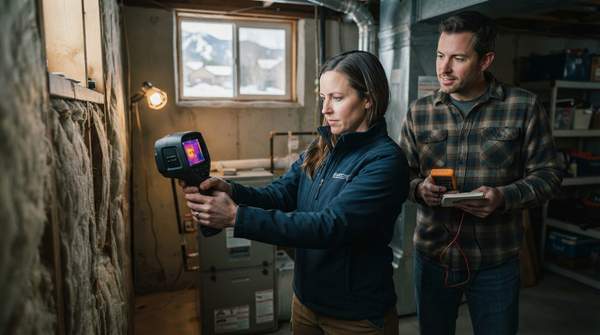
Summit County residents can then go beyond eyesight by borrowing an Energy Detective Kit from the Summit County Library. The library, in partnership with the Sustainability Division of the Health Department, offers interactive Energy and Water Saving Toolkits designed to help residents learn how energy and water are used in their homes and find waste. The Energy Detective Kit in particular helps residents perform an assessment of energy usage in their own home, and it includes a FLIR thermal camera and a smart plug watt meter—tools that reveal heat loss and phantom power draw that a visual inspection cannot. The county also offers a companion Conservation Kit containing LED bulbs, weather stripping, foam outlet gaskets, low-flow shower heads, and faucet aerators, letting borrowers act immediately on what they find.
Professional Assessment: Summit County's Home Energy Score Audit
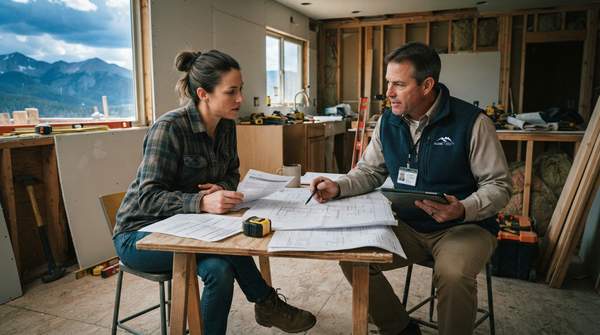
When a homeowner wants a rigorous, standardized evaluation, the next tier is a professional audit. Summit County's Energy Smart program directs residents to High Country Conservation Center, a local organization, to schedule an in-home energy audit. The county frames the benefit in both directions: making a home more efficient helps the community fight climate change while saving money and improving comfort.
The audit follows the U.S. Department of Energy's Home Energy Score format. As the Park Record reported when the county introduced its pilot program, the energy score includes details about the home's current structure, systems, and estimated energy use. An assessor generates a score on a 1-to-10 scale, with 10 being the best, and the homeowner receives recommendations for improving that score. When the program launched, eligible homeowners were offered a subsidized assessment typically valued at around $200, part of an effort tied to the county's Climate Action Plan, which called for reducing emissions 15 percent below 2015 levels before 2030. Because that reporting dates from 2016, current pricing and eligibility should be confirmed directly with High Country Conservation Center before scheduling.
Summit County Home Energy Assessment Framework
The table below organizes the three assessment tiers so you can match your budget and goals to the right starting point and the specific local resource for each level.
| Assessment Method | Key Areas to Inspect | Relevant Summit County Resource |
|---|---|---|
| DIY Visual Inspection — free, immediate | Windows and doors: visible gaps, damaged seals, condensation between panes, deterioration; heating and cooling systems in need of maintenance | Your own walkthrough; follow up with HVAC tune-ups, which the Center for Energy and Environment says require a technician's in-home inspection |
| Library Toolkit Assessment — free to borrow | Heat loss and energy usage the eye can't see, measured with a FLIR thermal camera and smart plug watt meter | Energy Detective Kit from the Summit County Library, offered with the Sustainability Division of the Health Department; companion Conservation Kit includes weather stripping, LED bulbs, and aerators |
| Professional Home Energy Score Audit — paid, subsidized when eligible | Whole-home evaluation: structure, systems, and estimated energy use, scored 1-to-10 with improvement recommendations | In-home audit scheduled through High Country Conservation Center, using the U.S. Department of Energy's score format |
The logic of the tiers is cumulative rather than exclusive. A visual pass tells you where to point the thermal camera; the toolkit findings tell you whether a professional audit is worth the cost; and the audit's 1-to-10 score gives you a baseline to measure any upgrade against afterward.
High-Impact Energy Efficiency Upgrades for Summit County Homes
Once an assessment identifies weaknesses, the question becomes what to fix first. The National Association of Realtors' consumer guide identifies the common high-impact upgrades as improved attic insulation, energy-efficient windows, and modern HVAC systems, along with replacing older appliances with Energy Star–certified models or upgrading a water heater. Insulation deserves particular weight in Summit County's climate: Summit Utilities describes proper insulation as a key factor in keeping a home comfortable and efficient because it regulates the flow of heat in and out, keeping interiors warm in winter and cool in summer.
Not every improvement requires a contractor. The same NAR guidance lists low-cost actions that any household can take immediately: switching to LED bulbs, sealing air leaks around doors and windows, adjusting the thermostat, unplugging unused electronics, installing faucet aerators, and using energy-saving power strips. For heating and cooling equipment, the Center for Energy and Environment recommends seasonal maintenance, with some systems—like a full HVAC tune-up—requiring a technician's visit, while others, such as kitchen and bath fans, need only a thorough cleaning.
Local Incentives and Rebates for Energy Upgrades
Assessment findings become far more affordable when paired with available incentives. Summit Utilities offers savings on a variety of upgrades, from high-efficiency heating equipment to smart thermostats, for both homes and businesses. High Country Conservation Center serves as a local source for rebates on upgrades such as insulation and solar panels, making it a single stop for both the audit and help financing the fixes it recommends.
Two cautions apply. First, program terms, rebate amounts, and eligibility rules change over time, and the discounted-audit pricing reported in 2016 may not reflect current offers—verify everything with the provider before committing. Second, none of these steps substitutes for a professional home inspection during a purchase, and no source supports predicting exact savings for a particular house; the audit's score and recommendations are the reliable way to estimate what a given upgrade will do for your specific home.
Take Action: Your Next Steps to an Energy-Efficient Summit County Home
Summit County residents should begin their energy efficiency journey by utilizing local resources, starting with DIY checks and progressing to professional audits and available incentives. The concrete first move is simple: a resident has successfully borrowed an Energy Detective Kit from the Summit County Library or scheduled a Home Energy Score audit through High Country Conservation Center. Either action produces a measurable result—the toolkit's thermal camera and watt meter readings, or the audit's 1-to-10 score with its written improvement recommendations—and that baseline is what lets you prioritize insulation, sealing, or heating upgrades, apply the relevant Summit Utilities or High Country Conservation rebates, and re-score the home later to confirm the work paid off.
Sources
- Summit County, CO - Official Website — Summitcountyco
- How to Evaluate a Home’s Energy Efficiency Before Buying — Tapseries
- Toolkits — Summit County Health Department
- Summit County homeowners eligible for discounted energy audit - Park Record
- Welcome home: A homeowner’s guide to energy efficiency — Center for Energy and Environment
- Consumer Guide: Making Your Home More Energy Efficient — NAR
- Blog Detail — Summit Utilities