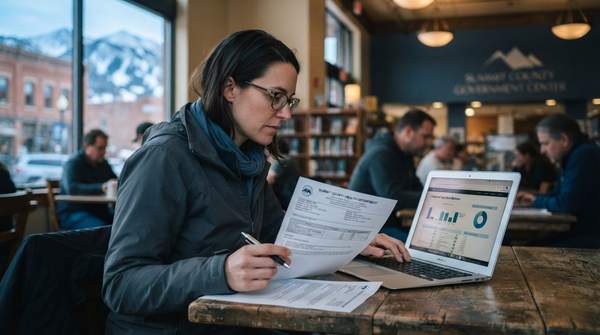
Summit County Public Health (SCPH) makes all food facility inspection reports publicly available, providing residents with a resource to review the food safety practices of local restaurants. These reports offer a "snapshot" of observations recorded during an inspector's visit, rather than a comprehensive overview of an establishment's long-term conditions. Understanding how to access these reports and interpret their findings can help residents make more informed dining choices. This guide details how to locate these reports and explains what they represent, including the different types of inspections conducted and the factors influencing their frequency. How to Access Summit County Restaurant Health Inspection Reports
Residents seeking Summit County restaurant health inspection reports can access them through official public resources. The primary method is to visit the Summit County Public Health website, which features a dedicated page for browsing inspection reports. This page is regularly updated, with the most recent update noted as May 8, 2026, ensuring access to current information.
Additionally, the Beacon Journal provides a data portal specifically for Summit County restaurant inspections. This portal allows users to search for specific restaurants and view a list of the latest inspection reports. For instance, recent inspections from September 25, 2026, for establishments such as Brighten Brewing Co. and Chick-Fil-A Restaurant, are listed with summaries and detailed findings. Both the Summit County Public Health website and the Beacon Journal's data portal offer direct links or search functionalities, enabling users to efficiently find specific restaurant inspection reports.Understanding What a Health Inspection Report Represents
An inspection report issued by Summit County Public Health serves as a "snapshot" of observations made at the specific moment an inspector was present at a facility. It is crucial to understand that this report may not fully represent the overall, long-term conditions within an establishment. On any given day, a facility might exhibit more or fewer violations than those documented during the inspection, as conditions can change.
Furthermore, any violation cited in a report is specific to that particular location only and does not necessarily reflect the conditions of other operations owned or managed by the same parent company. Summit County Public Health acknowledges that it is unrealistic to expect complex facilities to always be entirely free of violations. Therefore, when reviewing reports, it is important to consider the context of the inspection as a single point in time, rather than a definitive statement about an establishment's consistent performance.
Types of Inspections Conducted by Summit County Public Health
Summit County Public Health conducts various types of inspections to ensure food safety across licensed food service operations. The primary type is the standard inspection, which is typically unannounced. This means facilities do not receive prior notice of an inspector's visit, allowing inspectors to observe the establishment's routine operations under normal circumstances.
Beyond standard inspections, SCPH also conducts follow-up inspections. These subsequent visits are particularly important when critical violations have been identified during a previous inspection. The purpose of these follow-up reports is to document the successful resolution or correction of any cited violations. This process indicates the operator's responsiveness to public health concerns and their commitment to rectifying issues. Inspection reports become available throughout the year as these various types of inspections are conducted, adhering to established frequency requirements.Factors Influencing Inspection Frequency
The frequency of health inspections for food service operations in Summit County is determined by several key factors, primarily the complexity of a facility's menu and its potential risk for causing foodborne illness. Establishments are typically inspected between one and four times per year, depending on these risk assessments.
According to Rachel Kellogg, an environmental health specialist at Summit County Public Health, operators of higher-risk facilities are required to receive at least two standard inspections each licensing year, occurring approximately every six months. In contrast, low-risk establishments receive at least one standard inspection per licensing year. To prevent facilities from becoming complacent or predictable, inspectors like Kellogg may sometimes make unexpected visits outside of the regular cycle. This risk-based approach ensures that establishments with a higher potential for food safety issues receive more frequent oversight, with inspection reports becoming publicly available as these required inspections are completed.
Interpreting Inspection Findings and Operator Responsiveness
When reviewing Summit County restaurant health inspection reports, it is essential to interpret the findings within their proper context. Remember that any violation noted is specific to the particular location inspected and does not automatically apply to other establishments under the same ownership or management.
Summit County Public Health emphasizes that a key measure of an operator's commitment to public health is their responsiveness to identified issues. The successful resolution or correction of violations, as documented in subsequent inspection reports, indicates that the operator has addressed the concerns. Given that complex facilities may not always be entirely free of violations, the presence of a violation does not necessarily mean an establishment is unsafe if the operator demonstrates a proactive approach to correcting it. Therefore, when examining reports, look for evidence of corrective actions and follow-up inspections that show violations have been resolved, as this demonstrates an operator's commitment to maintaining food safety standards.