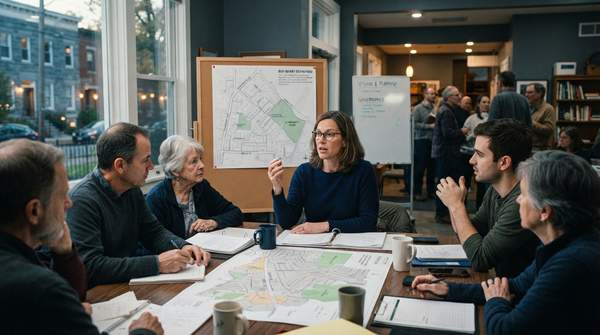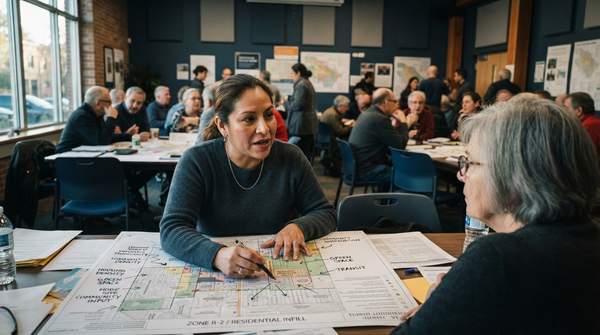
Every neighborhood's future—the homes that get built, the roads that carry traffic, the businesses that open nearby—is shaped by a document most residents never read: the local community plan, often called a comprehensive or master plan. The good news is that these plans are not written in isolation. Public participation is treated by planners as a cornerstone of the process, and residents who understand what a plan contains, and when decisions are being made, can influence it through meetings, surveys, and written comments. Here is how to do that, step by step.
Understanding Your Community Plan
A community plan is a strategic framework a municipality uses to manage long-term growth and development. Writing about municipal master planning, Zach Jones of FMX describes the process as giving communities "a strategic framework for adding population and solving new challenges for residents," one that guides land use, infrastructure development, housing initiatives, and economic expansion. In other words, the plan is a roadmap for what change will look like over the coming years and decades.
The University of Wisconsin–Madison Extension's land use training program explains that a community plan "can guide decisions related to land use, economic development, environmental protection, community revitalization, infrastructure and service provision, and other related matters." Communities that plan, the Extension notes, manage new growth and seize opportunities better than those that do not, because planning coordinates individual land use decisions and helps prevent haphazard development.
The Extension is candid that this work is demanding: community planning "entails a lot of time, work and resources" and includes difficult decisions. But it also identifies a tangible benefit—education and engagement of the public—describing the planning process as "an opportunity to learn and re-learn about the community, its residents and their hopes and wishes for the future."
Key Components of a Community Plan
Understanding the plan's typical subject areas tells you what is actually at stake when officials sit down to draft or revise one. Across planning resources, several core areas recur:
- Land use and zoning. Deciding which areas are designated residential, commercial, or industrial. FMX notes that these designations optimize land use, prevent sprawl, and can encourage business investment.
- Housing. Housing initiatives that shape what kinds of homes are built and where.
- Infrastructure and services. Roads, utilities, and other public services. The Wisconsin Extension observes that planning helps determine whether local infrastructure and services are adequate to accommodate new development.
- Economic development. Identifying existing businesses and industries and determining what kinds of businesses the community wants or needs in the future.
- Environmental protection and community revitalization. Both are named by the Extension as areas a plan can guide.
When you read a draft plan or attend a meeting, these are the categories of decisions being weighed—and the hooks on which to hang your own concerns about your street, your commute, or your neighborhood's character.